










A hose left loose in the yard tangles, kinks, and wears out faster than one that's stored properly. A reel solves that by keeping it coiled, protected from the sun, and ready in seconds whenever you need it. Wall-mounted, ground-mounted, and manual crank models each suit different yards and budgets. This guide covers the main types, what specs actually matter, and how to match a reel to your own yard.
What Is a Garden Hose Reel and What Does It Do?
The Basic Idea: Pull Out, Lock, Use and Rewind
A hose reel stores the hose on or inside a drum or spool. On retractable models, you pull out the length you need, lock it at the desired length and start watering — a short tug releases the lock and the internal spring winds the hose back. On manual reels, you unwind the hose by hand and crank it back after use.
Key Specs: Hose Length, Hose Diameter and Working Pressure
Three numbers matter most:
-
Hose length determines reach from the faucet. Common garden hose reel options range from 65 ft to 130 ft, so it helps to know your yard's reach before comparing models.
-
Hose diameter affects flow. A 1/2-inch hose is lighter and easier to pull; a 5/8-inch hose delivers more water per minute for larger lawns and heavier cleaning.
-
Maximum working pressure shows the pressure range the hose is designed to handle during normal use. It is not the same as burst pressure.
For everyday watering, longer is not always better. Pick the shortest length that comfortably reaches your farthest watering zone. A shorter hose is usually lighter, easier to handle and often less expensive.
Hose Reel vs. Hose Holder vs. Hose Cart
A hose holder is a wall hook — it holds a coiled hose but does not wind it. A hose cart rolls on wheels and usually requires manual winding. A hose reel wraps the hose onto a drum or spool with a spring or hand crank.

What Are the Main Types of Garden Hose Reels?
Wall-Mounted Hose Reels
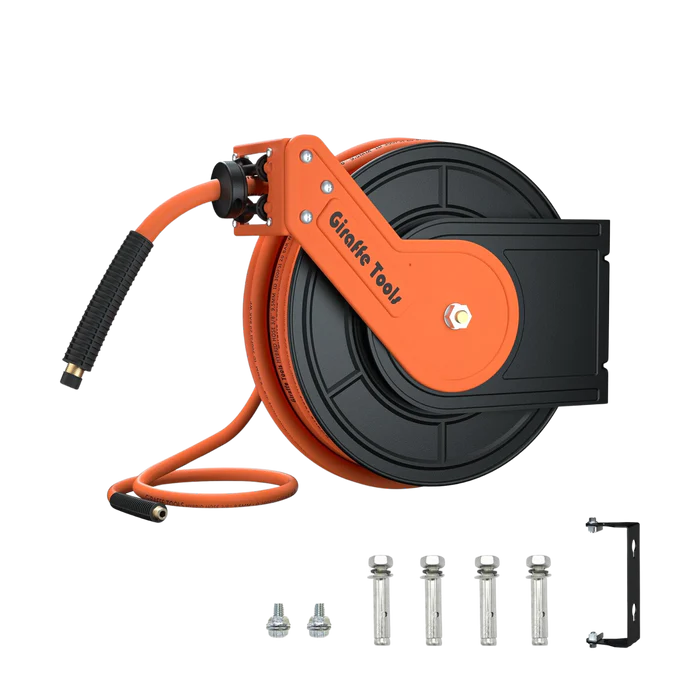
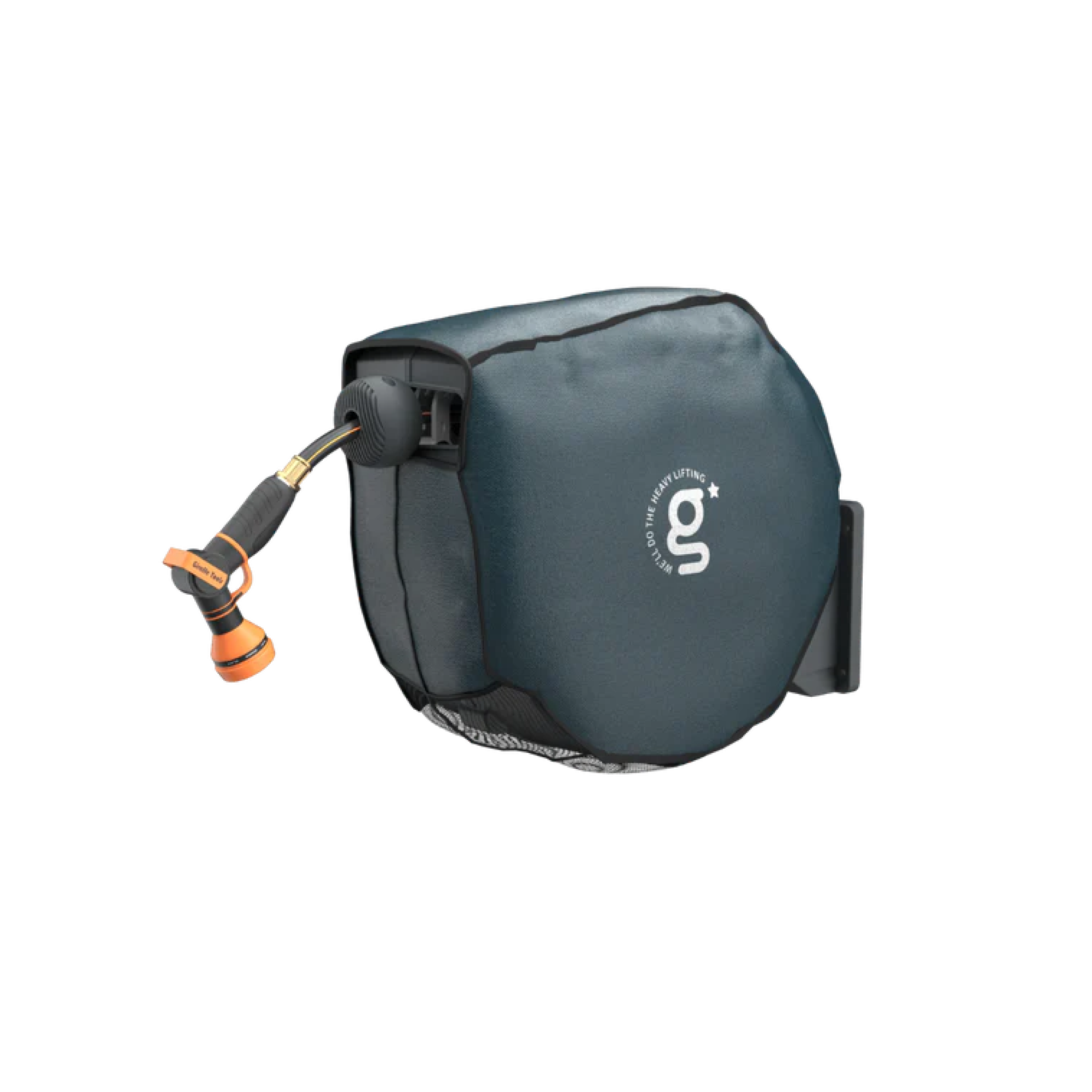
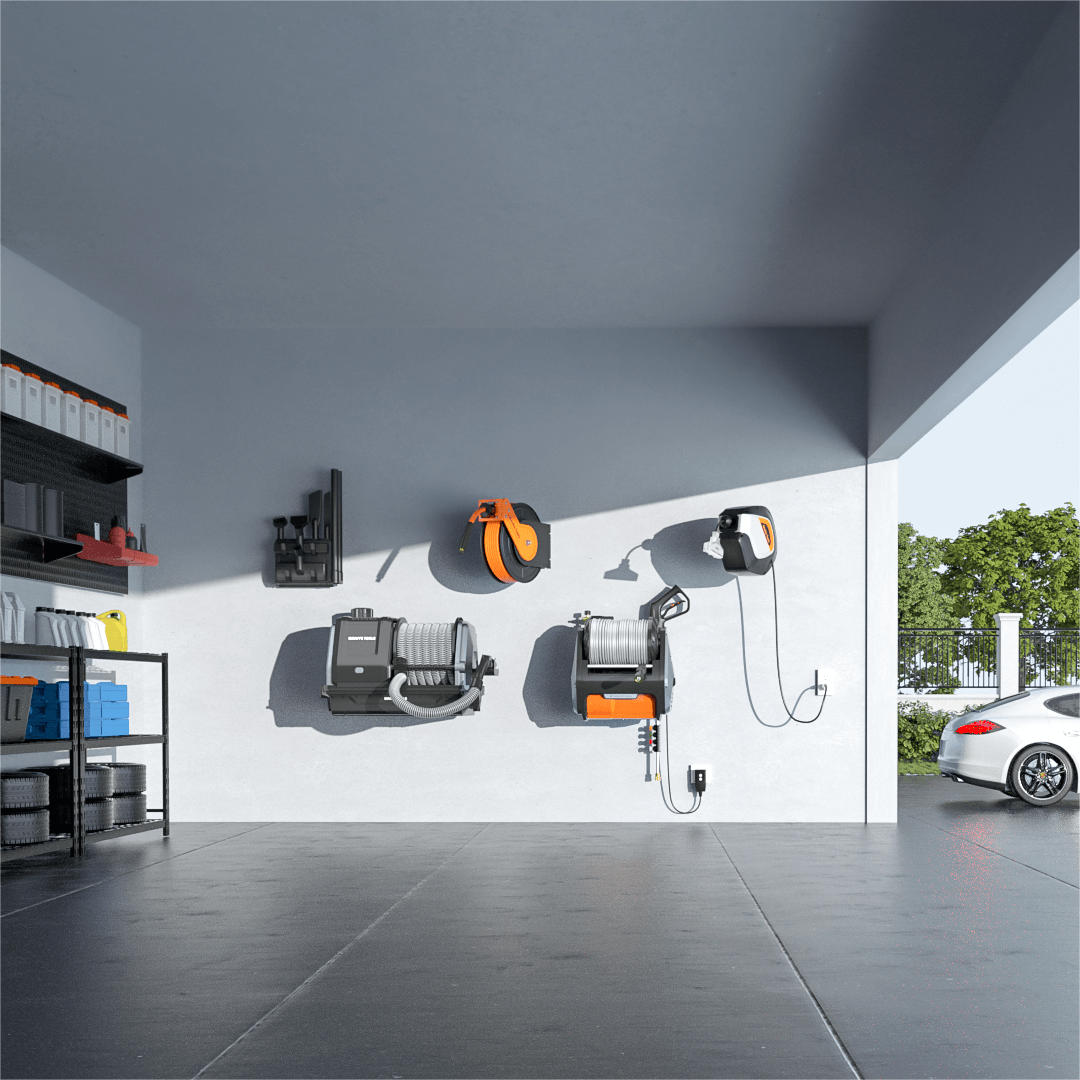
A wall-mounted reel attaches to a garage wall, brick wall, concrete wall or sturdy wood post. It stays off the ground, keeps the hose at a convenient height and frees up floor space. Consumer Reports classifies wall-mounted reels as units fixed to the house or garage exterior that keep hoses tidier and out of the way.
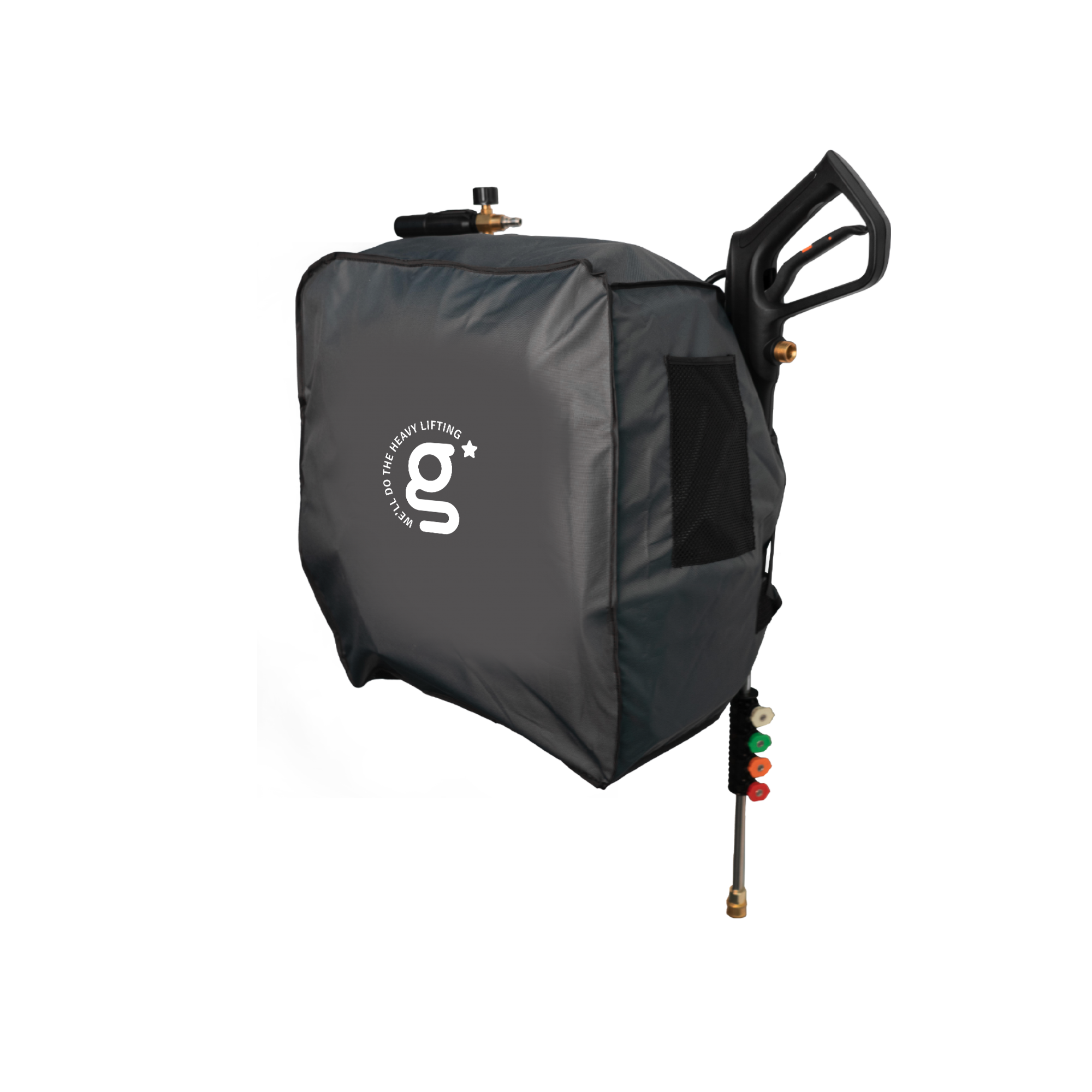
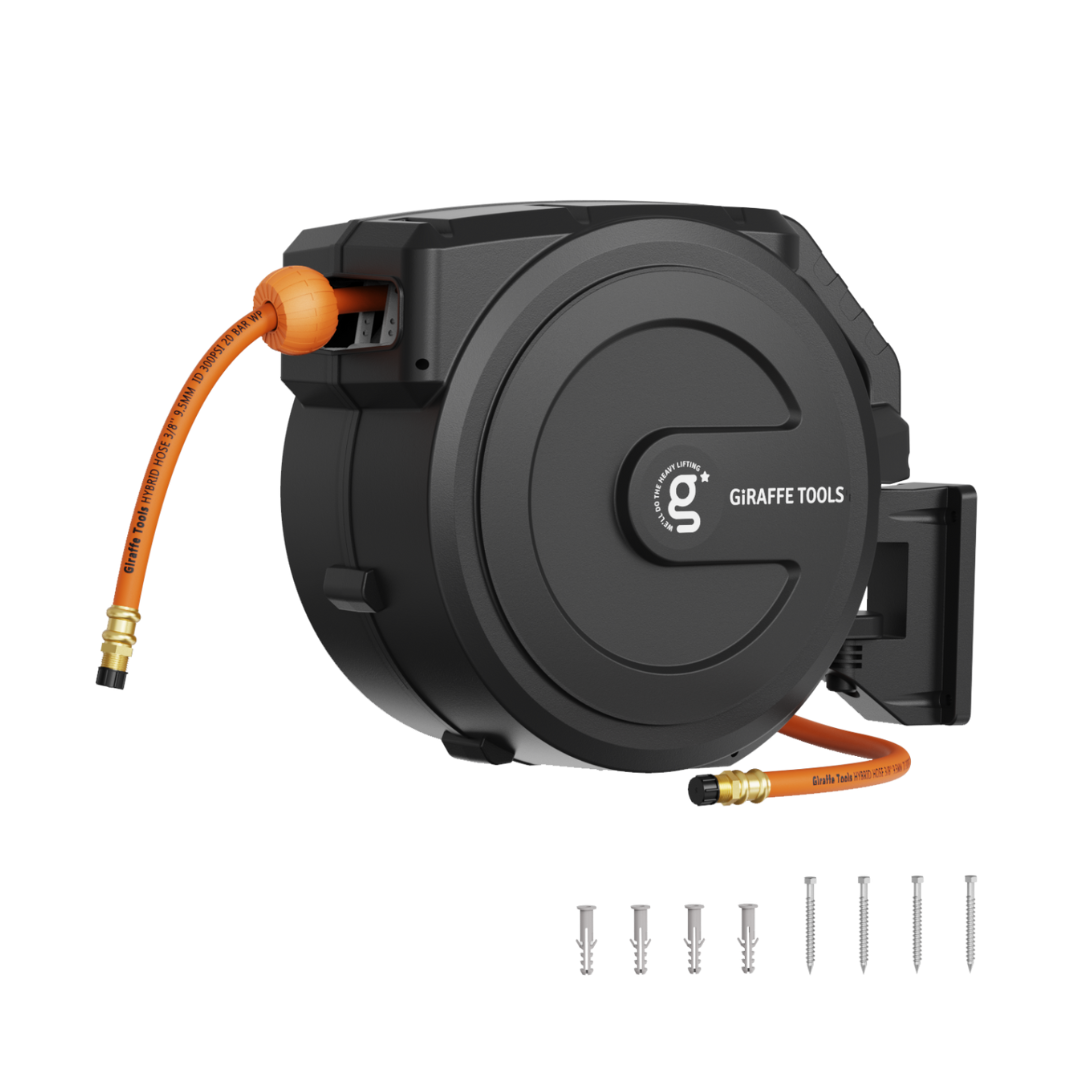
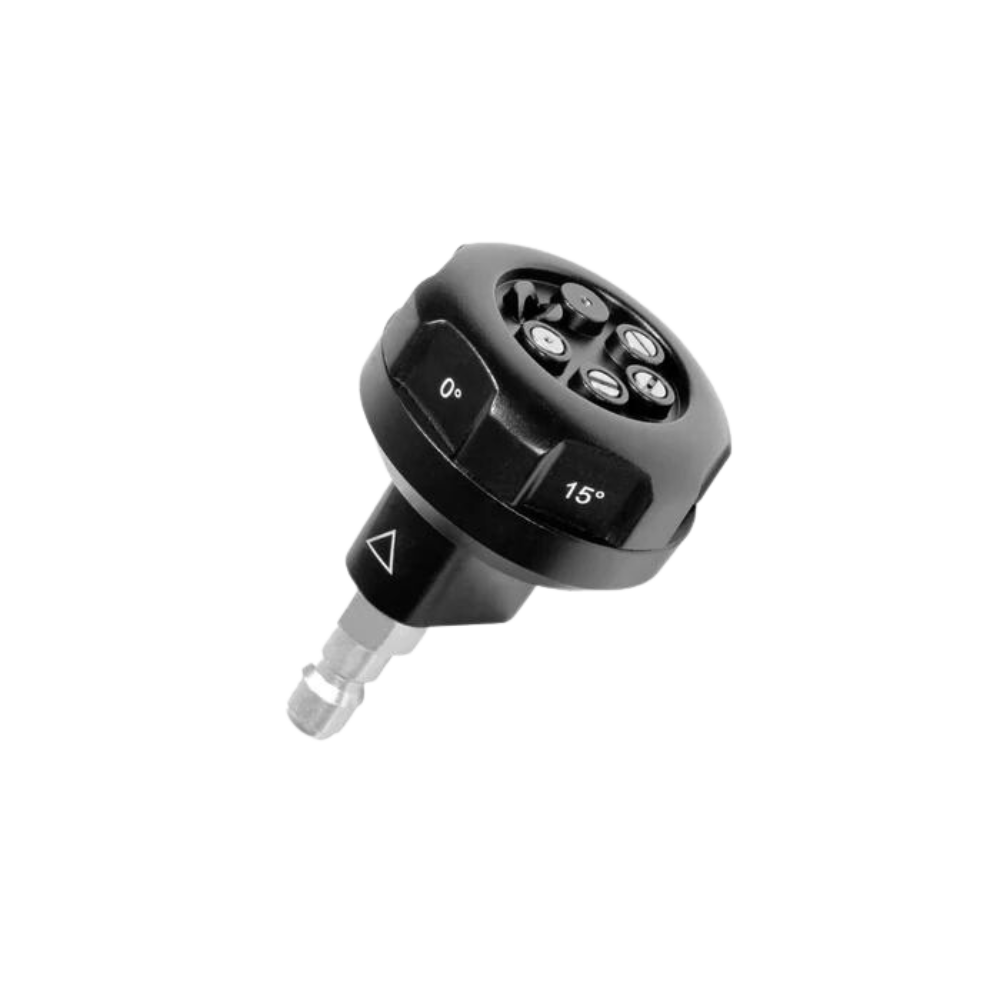
Wall-mounted retractable reels typically include auto-rewind, any-length locking and a 9-pattern nozzle across lengths from 65 ft to 130 ft. A 100 ft wall-mounted option may suit homeowners who need to reach both the front and back yard from one faucet.
Ground-Mounted or Freestanding Hose Reels
If you cannot drill into your wall — or prefer not to — a ground-mounted reel sits on a stake or base plate at ground level. It works on decks, patios, lawn edges and rental properties.
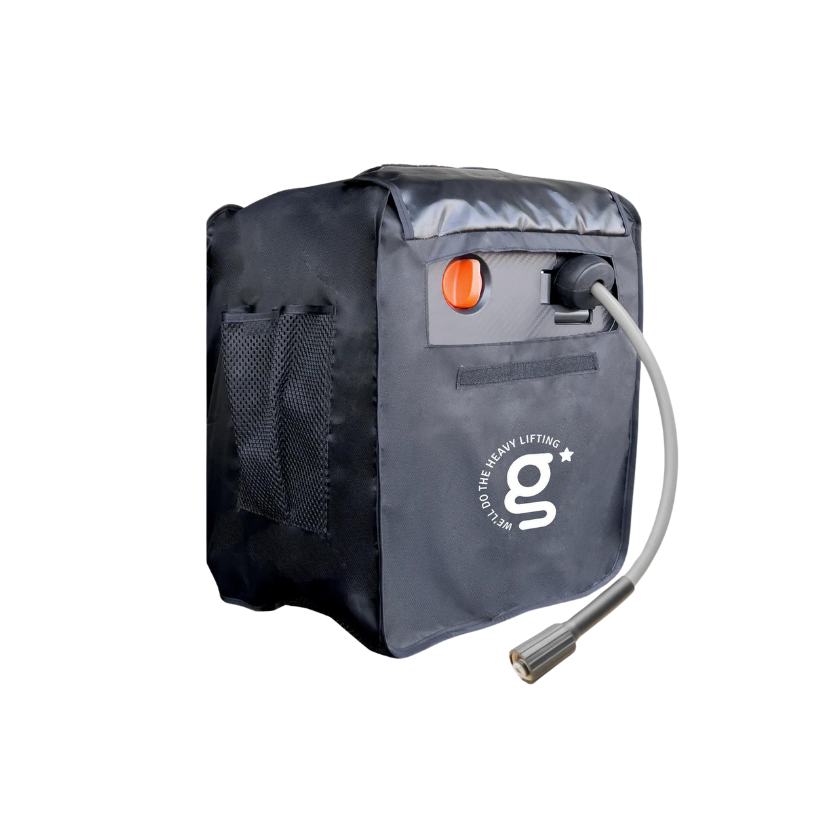
Ground-mounted retractable models typically come in 82 ft, 92 ft and 130 ft options and avoid wall drilling. Lawn installation can use ground pins, while hard surfaces may need the supplied anchors or fasteners. These reels rotate 360 degrees, lock the hose at any length and retract automatically.
Manual Crank Hose Reels
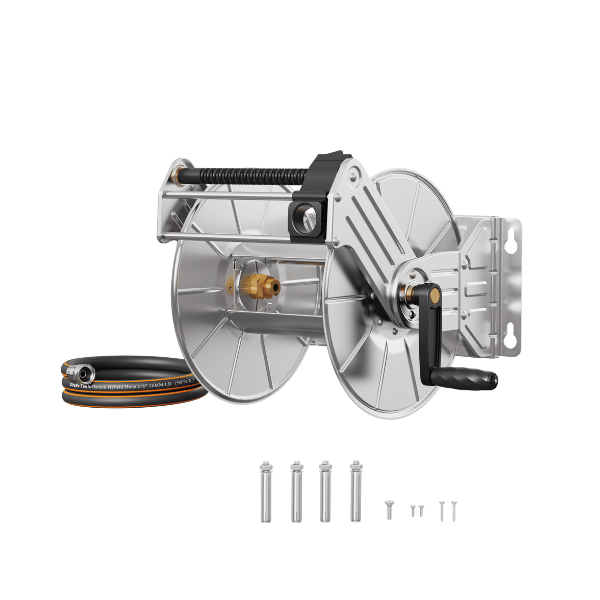
A manual crank reel winds the hose back by hand. Basic models can be cheaper, but heavy-duty stainless steel reels may cost as much as retractable ones. A wall-mounted manual reel built from 304 stainless steel with brass fittings is one heavier-duty option worth considering.
Hose Reel Carts and Portable Reels
A hose cart mounts the drum on a wheeled frame and rolls to different faucets — ideal for large properties with multiple water sources. A loaded cart can be heavy and takes effort to move across soft grass or gravel.
Retractable vs. Manual Hose Reels
The main difference between a retractable and manual hose reel is how the hose winds back onto the drum. Retractable models use an internal spring to rewind the hose automatically, while manual models use a hand crank. Mounting style is separate from the rewind method. Retractable and manual reels are available in different mounting styles, although the exact options vary by model.
|
Feature |
Retractable Hose Reel |
Manual Hose Reel |
|
Rewind method |
Automatic spring-powered rewind |
Hand crank |
|
Hose locking |
Common; many models support any-length locking |
Some models include a drum lock or brake |
|
Hose replacement |
Often built in; replacement options vary by model |
Usually accepts a separate replaceable hose |
|
Setup |
Usually requires wall or ground mounting hardware |
Available as wall-mounted reels, carts and freestanding models |
|
Typical cost |
Often higher because of the spring and locking system |
Basic models often cost less; heavy-duty metal reels may cost more |
|
Best for |
Frequent watering and faster cleanup |
Simple mechanics and greater hose choice |
What Are the Benefits of Using a Garden Hose Reel?
A Cleaner Yard With Less Hose Mess
A hose on the ground collects dirt, blocks foot traffic and clutters the patio. A reel puts it away after each use, and comparing wall-mounted and ground-mounted models side by side makes it easy to spot the right fit for your yard.
Less Kinking, Tangling and Manual Coiling
Well-designed retractable reels use a guide or layering system to help the hose return evenly onto the drum. Many models use an adaptive layering system that helps reduce pileups, tangles and uneven rewinding. With auto-rewind, the routine is: pull, lock, water, tug, done.

Better Hose Protection Over Time
UV light, heat and repeated folding can weaken a garden hose over time. Enclosed retractable reels help reduce sun exposure by storing the hose inside a housing, while manual reels and carts mainly keep the hose off the ground and neatly coiled. Either way, a reel can help reduce daily dragging, sharp bends and messy storage.
How Do You Pick the Best Garden Hose Reel for Your Yard?
Hose Length by Yard Size
Walk from your faucet to the farthest watering point. Add 10 to 15 feet of slack.
-
65 ft — small front yard, patio planters
-
82 ft — medium backyard, deck, raised beds
-
100 ft — front and back yard from one faucet
-
130 ft — deep lots, corner lots, long driveways
1/2 in vs. 5/8 in: Matching Diameter to Watering Needs
A 1/2-inch hose is lighter and easier to pull, making it suitable for flower beds, container plants and light rinsing. A 5/8-inch hose provides more flow for larger lawns, sprinklers and heavier cleaning. Both sizes are available across the giraffe tools lineup.

Mounting Surface Considerations
-
Brick, concrete or solid wood — wall-mounted reels anchor securely.
-
Vinyl siding — may not hold the weight. Choose ground-mounted.
-
Deck or post — possible with the right bracket. Check weight capacity.
-
Open lawn or concrete surface — ground-mounted with lawn pins or supplied anchors, depending on the surface.
-
Rental property — a ground-mounted model avoids wall holes, but check the lease and the required method for securing the base.
Winter Storage for Canadian Climates
Water left inside a hose or reel can freeze, expand and crack fittings. Before the first hard frost:
-
Disconnect the reel from the faucet.
-
Extend the hose fully and let all water drain.
-
Open the drain plug on the housing if present.
-
Store in a garage, shed or basement.
Oregon State University Extension warns that residual water freezing inside a hose can split the wall from the inside. A few minutes spent draining and storing the reel before freezing weather may help prevent damage and avoid an early replacement.
A Reel Built for Long-Term Use
A reel that holds up to daily use saves you from replacing worn hardware within a year or two. An enclosed housing, any-length locking, and a smooth auto-rewind mechanism all help a reel keep performing season after season instead of jamming or fraying at the connections.
The Retractable Garden Hose Reels 65ft-130ft lineup is built around exactly that kind of daily reliability. It includes auto-rewind, any-length locking, and a 9-pattern nozzle, with lengths from 65 ft up to 130 ft so the same lineup covers a small patio or a deep corner lot. The enclosed housing keeps the hose shielded from sun and weather between waterings, which helps it last longer than a hose left coiled on the ground.
Wall-Mounted or Ground-Mounted: Which Should You Choose?
|
Type |
Best For |
Pros |
Watch Out For |
|
Wall-mounted retractable |
Solid walls, front/back yard, saving floor space |
Off the ground, auto-rewind, clean look |
Needs solid mounting surface |
|
Ground-mounted retractable |
Decks, lawns, rentals, multi-direction watering |
No wall drilling, 360° rotation, auto-rewind |
Takes up ground space |
|
Manual crank |
Users who prefer a simple mechanical setup |
Fewer auto-rewind parts, can work with a separate hose |
Hand winding after each use; heavy-duty models may not be cheaper |
|
Hose cart |
Large yards, multiple faucets |
Portable, high capacity |
Heavy when loaded, needs storage |
Pick wall-mounted when your faucet sits against a solid wall and you water one general area. Pick ground-mounted when you rent, have vinyl siding, skip drilling or need full 360-degree reach. Once you've settled on a mounting style, measuring your yard's real watering route will confirm the exact length you need rather than guessing from lot size.
What Should Be on Your Buying Checklist?
-
Measure the farthest watering point from your faucet.
-
Assess your wall — decide whether it can support a mounted reel.
-
Pick 1/2 in or 5/8 in based on daily watering flow needs.
-
Decide on auto-rewind — it saves time but costs more than a manual crank.
-
Plan for winter — drain and store before freezing temperatures arrive.
Final Thoughts
For most homeowners who want a tidier yard and faster watering, a retractable garden hose reel is the most practical upgrade. Match the length and diameter to your yard first, then let your wall or ground surface decide the mounting style.
Frequently Asked Questions
Does a Hose Reel Increase Water Pressure?
No, a hose reel only stores and manages the hose. Water flow depends on your home's pressure, hose diameter, length, and nozzle type — a 5/8 in hose typically allows more flow than a 1/2 in hose, which is lighter to pull instead.
What Should I Do if the Hose Does Not Retract Fully?
Turn off the faucet and squeeze the nozzle to release trapped pressure. Pull the hose out again without passing the STOP mark, then give it a short tug and guide it back slowly. If it still won't retract, contact customer support.
Should I Open a Retractable Hose Reel to Repair the Spring?
No. The internal spring is held under tension and the housing isn't built for routine repairs. Contact the manufacturer or an authorized service provider instead of opening the reel yourself, since this can cause injury or damage.


