











A vacuum cleaner works best when its head matches the surface. Use a wide floor nozzle for open areas, a crevice tool for narrow gaps, a soft brush where you do not want to scratch, and a wet pickup nozzle only for a vacuum approved for liquids. The right attachment improves pickup, protects the surface and saves you from making repeated passes with the wrong tool.
Before using an attachment, confirm that it belongs to your model or is listed as compatible by its maker. A tool may look as though it fits but still leave an air leak, slip off the wand or restrict airflow.
Which Vacuum Cleaner Head or Tool Should You Use?
A vacuum head is the larger piece that sits against a floor, carpet or another broad surface. It spreads suction over a wider area and is made for covering ground efficiently. A tool is smaller and more focused. It concentrates airflow, adds bristles or reaches places a floor head cannot fit.
Names vary by brand, so look at the shape before the label. A flat, wide opening suits a floor. A narrow tube suits a gap. Bristles help release dust and hair from fabric or textured surfaces. A rubber squeegee pulls liquid towards the intake. Do not force one attachment to do every job: the wrong opening can scatter debris, mark a delicate surface or become blocked quickly.
|
Tool |
Best use |
Avoid |
|
Floor nozzle |
Concrete, mats, open carpet and broad dry debris |
Forcing it into rails or narrow gaps |
|
Circle floor brush |
Seats, upholstery, shelves and textured trim |
Hard scrubbing on worn fabric or glossy surfaces |
|
Flat crevice nozzle |
Baseboards, console edges and narrow floor gaps |
Large gravel or objects that can lodge inside |
|
Crevice tool |
Corners, seat seams and general tight spaces |
Pushing it into unknown gaps with wiring |
|
Long crevice tool |
Seat rails, deep appliance gaps and behind benches |
Using it as a pry bar |
|
Wet pickup squeegee floor nozzle |
Small water spills and damp mats |
Liquids not approved in the manual |
Which Head Should You Use on Floors and Rugs?
Floor Nozzle for Open Hard Floors and Mats
Use the floor nozzle for concrete, sealed garage floors, tile, vinyl, entry mats and broad areas of vehicle carpet. Move it in slow, overlapping passes and keep the opening flat to the surface. On loose sand or gravel, work from the edge of the pile inwards so you do not push debris ahead of the nozzle.
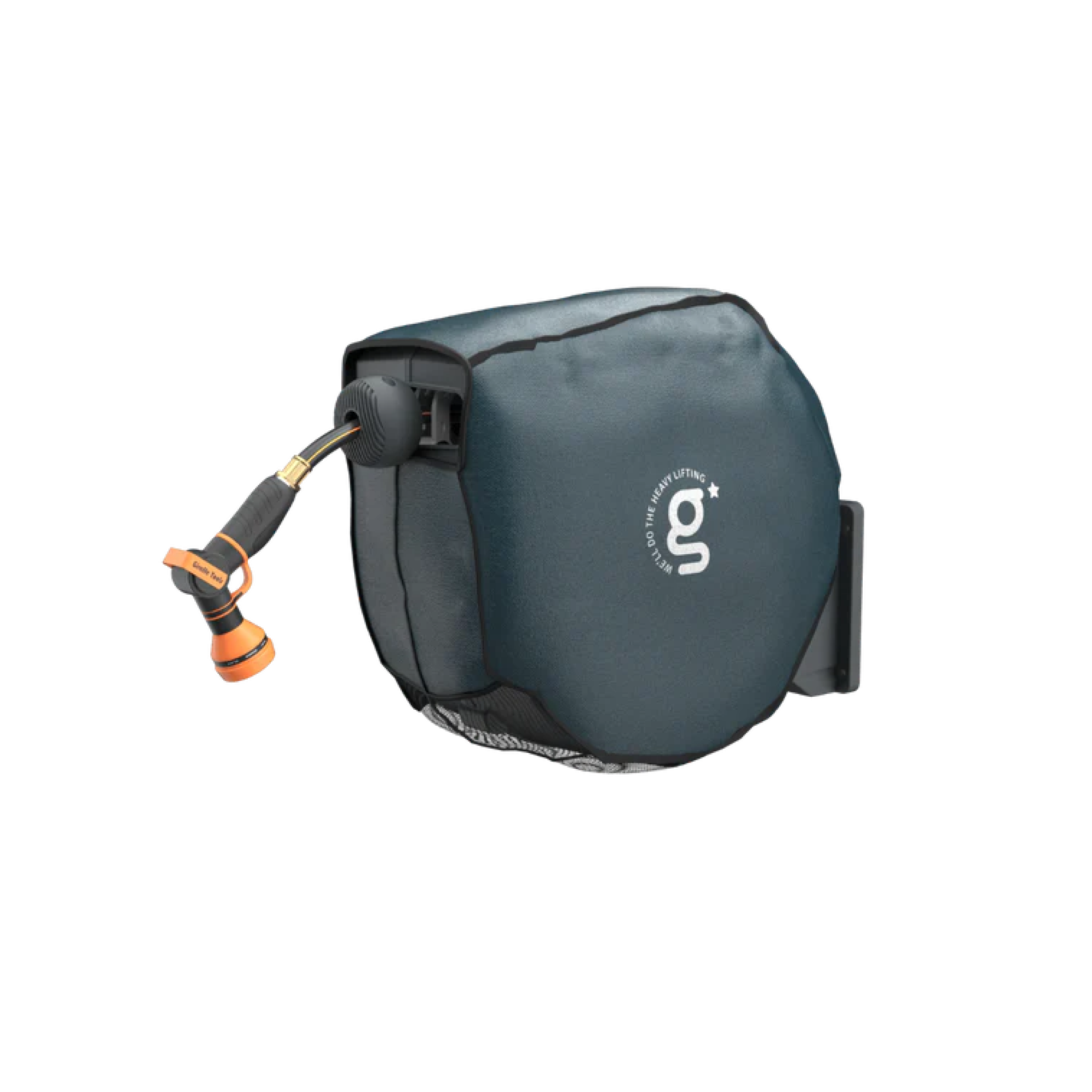
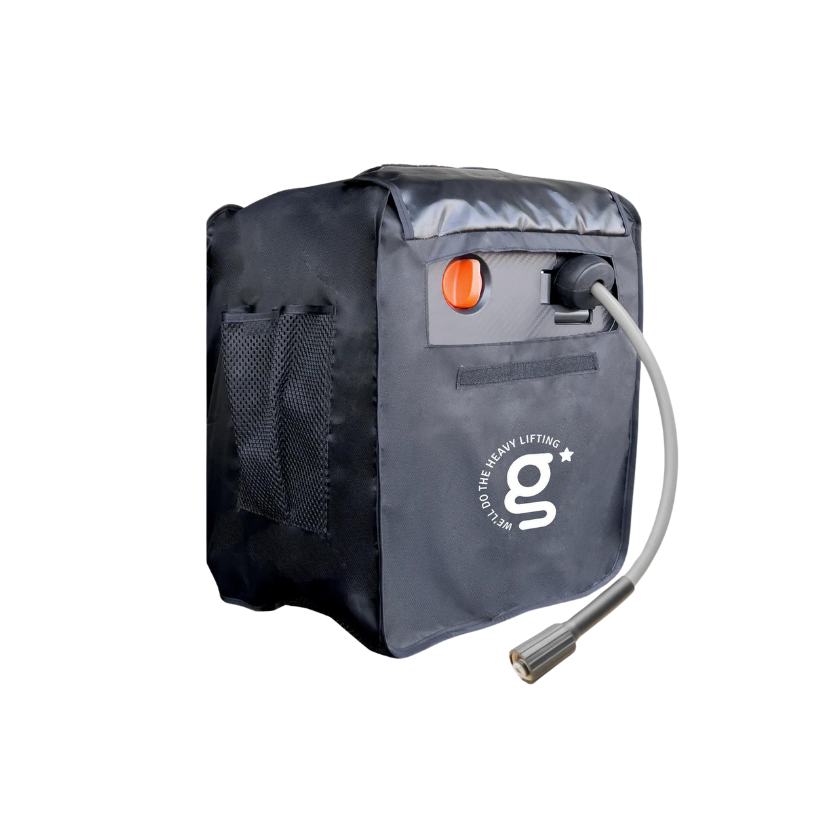
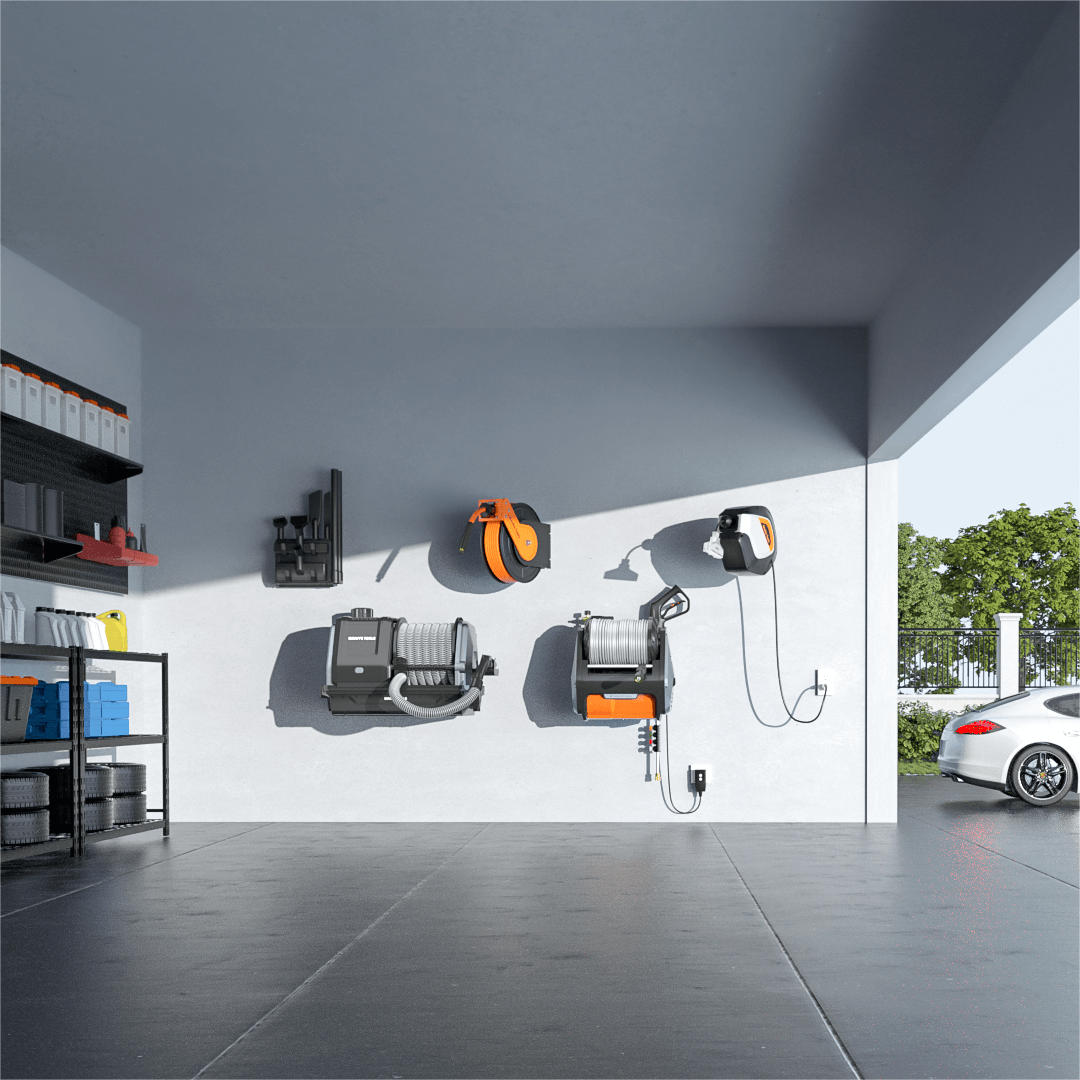
A wall-mounted machine makes this routine easier when the garage, driveway edge and vehicle are regular cleaning areas. Compare a garage vacuum by hose reach, wet/dry approval and included tools, not suction alone. A long hose is useful only when the correct head is ready at the end of it.

Circle Floor Brush for Carpet and Upholstery
A round brush is for dirt that clings rather than lies loose. Use light strokes on vehicle seats, carpeted mats, fabric panels and textured trim. The bristles disturb crumbs, pet hair and dried grit so the airflow can collect them. Keep the brush moving and use less suction on thin fabric, loose threads or delicate trim.
Which Tool Reaches the Gaps a Floor Head Misses?
Crevice Tool for Everyday Narrow Spaces
Use a crevice tool along baseboards, around garage shelving, in window tracks, beside appliances and between car seats. Its small opening concentrates suction where a floor nozzle cannot seal. Start at the back of a gap and draw the tool towards you, rather than pushing dust farther inside.
Long Crevice Tool for Deep Vehicle and Workshop Gaps
Choose the longer version for seat rails, under seats, between a workbench and wall, or behind stored equipment. Do not ram it into a tight opening; plastic clips, wiring and fabric can be damaged. If the tool suddenly loses pull, switch off the vacuum and check the narrow passage for paper, hair or compacted grit.
If you are comparing hose reach and storage as well as the tools themselves, this guide explains what to check in a retractable vacuum.
What Should You Use on Seats Shelves and Delicate Surfaces?
Use the circle floor brush on fabric seats, cushions, shelves, dashboard trim and light dust on workbenches. The bristles loosen dust while keeping the hard plastic edge away from the surface. Test an unobtrusive area first if fabric is worn, a coating is flaking or a surface has a high-gloss finish.
For a vehicle, work from the upper seatback down to the cushions, then finish with the crevice tools around seams and rails. This prevents dust dislodged by the brush from settling back onto an area you already cleaned.
When Is a Wet Pickup Nozzle the Right Choice?
Use a wet pickup squeegee nozzle for small water spills, damp entry mats or liquid left after a controlled cleanup. Its rubber edge helps draw liquid into the opening instead of spreading it across the floor. It is not a substitute for a mop on a large spill, and it should never be used with a vacuum that is not approved for wet pickup.
Set up the machine exactly as the manual directs for liquid collection. Check the filter arrangement, empty the tank before it reaches its stated limit and stop if foam enters the hose. Never vacuum flammable liquids, hot ash, solvents, oil or unknown chemicals.
When one cleaning routine includes dry garage dust, vehicle mats and occasional small liquid messes, a wet and dry vacuum cleaner avoids changing machines. The Grandstorm has six attachments, at least 20 kPa suction, a 30 ft auto-retracting hose and a 4-4.5 gallon dustbin, so the floor, brush, crevice and wet-pickup jobs can stay in one organised setup.
How Do You Get Better Results From Any Attachment?
- Fit the tool fully and check for a secure seal before switching on. A loose connection leaks airflow and makes a good vacuum feel weak.
- Use the widest suitable head first. Change to a smaller tool only where the surface or gap requires it.
- Brush hair and fibres off the tool after each use. A blocked bristle ring or narrow nozzle reduces airflow quickly.
- Empty the dustbin and clean or replace filters as directed. A clean air path matters as much as the attachment shape.
- Store the tools where they will not be stepped on or buried under garage items. A missing tool is usually the reason a floor head gets used everywhere.
The aim is not to use every attachment in one session. Start with the tool that fits the largest surface, then switch only when the next area needs more reach, gentler bristles or a narrower opening. That simple order makes a car, garage or entryway cleanup quicker and keeps attachments in better condition.
If you want to see how these tools are stored beside a wall-mounted unit, the garage vacuum cleaner overview shows the Grandstorm tool and hose setup for repeat garage and vehicle cleanups.
FAQs
What is the crevice tool on a vacuum cleaner for?
It is for narrow gaps that a floor nozzle cannot reach, including seat seams, baseboards, window tracks, appliance edges and garage corners. Its small opening concentrates suction in a tight area.
Which vacuum attachment is best for car seats?
Use a soft round brush for fabric seats and upholstery, then use a crevice tool around seams, rails and the centre console. A floor nozzle is better for the larger carpeted area and mats.
Can I use a brush attachment on carpet?
Yes, a soft brush helps loosen hair, grit and crumbs from low-pile carpet or vehicle mats. Keep it moving and test a discreet area first if the carpet is delicate, loose or heavily worn.
Can I vacuum a wet spill with a normal floor nozzle?
No. Use the wet pickup nozzle only on a vacuum approved and configured for wet collection. A normal dry vacuum or incorrect filter setup can be damaged by liquid.
Why does suction feel weak with a small attachment?
Small tools can clog with hair, paper or compacted grit. Switch off the vacuum, remove the tool and clear it by hand. Also check the hose, dustbin and filter for restrictions.


